

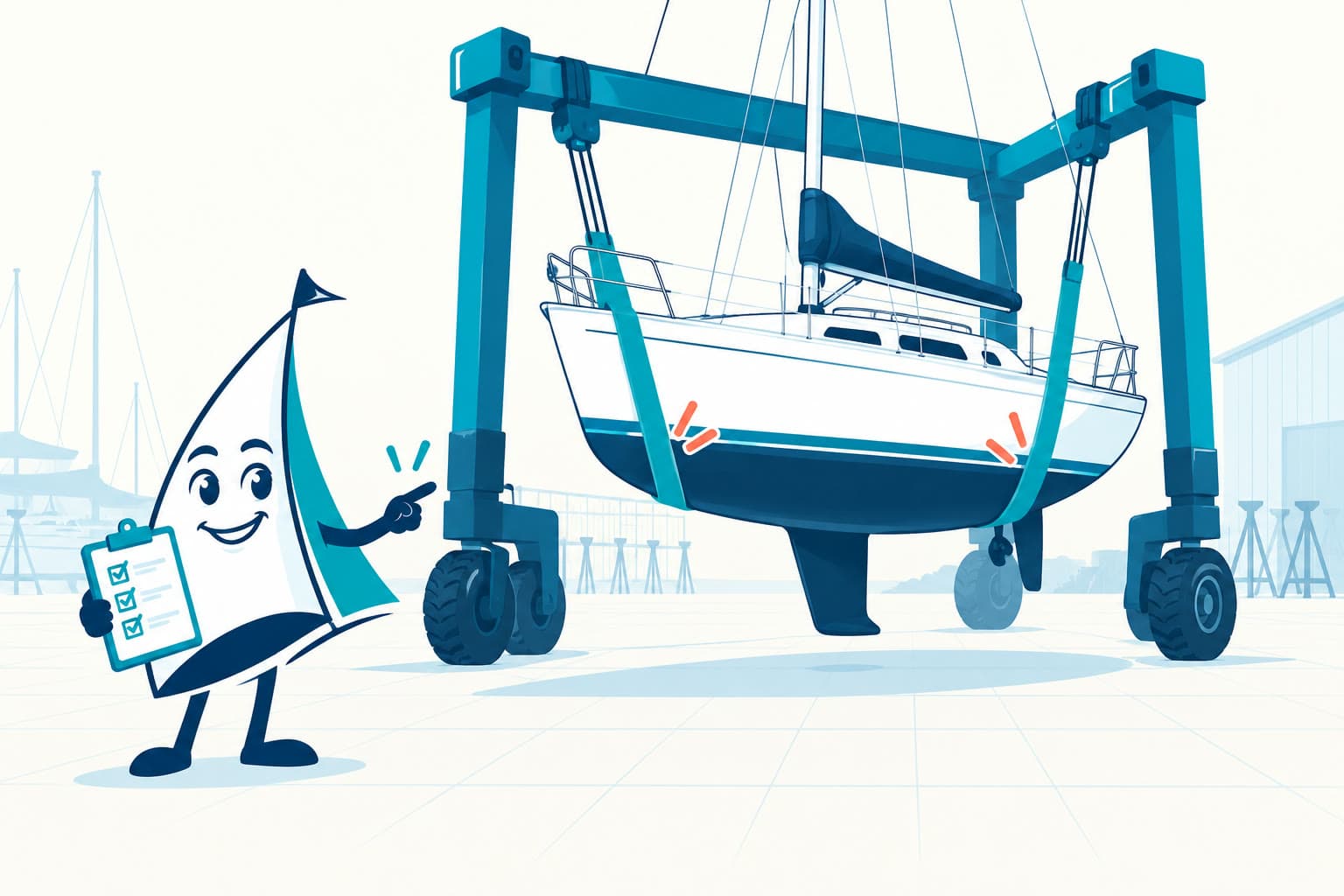
Berthing near a boatyard can simplify maintenance, but the right facility depends on lift capacity, hardstand access and the work you intend to do.
01 / THE METHOD
Define the scope of work
Separate jobs that can be done afloat from those requiring haul-out. Antifouling, anodes, shaft or rudder work, survey access and below-waterline repairs typically need suitable lifting and hardstand arrangements. A marina with wet berths may not operate a lift or offer contractor access.
02 / THE METHOD
Check the actual lift and yard
Ask about travel-lift or crane capacity, maximum beam and draft, sling placement, booking lead time, hardstand availability and launching conditions. If a facility is listed as having a boatyard, that is only a starting point; the specific equipment and services still need direct confirmation.
03 / THE METHOD
Confirm trades and rules
Find out whether you can use your preferred contractors, what insurance and induction they need, and whether the yard offers the required trades. Ask about waste disposal, sanding/painting rules, access hours, parking and storage of parts and tools.
04 / THE METHOD
Compare the entire schedule
A berth, haul-out slot, hardstand time and relaunch need to line up. Get a written timeline and all-in quotation, including lift, pressure wash, storage, labour and any delays. Leave room for weather or unexpected findings.
ASK THE OPERATOR
Questions about marina boatyard services
- Can the lift handle my vessel weight, beam and underwater shape?
- Is hardstand available for the full job?
- Can my chosen trades work on site?
- What are the lift, storage, waste and relaunch costs?
Record berth-specific answers and source dates
A blank field is useful when it becomes a precise question. Record who answered, when they answered and whether the reply applies to the exact berth, vessel and dates.
These questions support a shortlist, not a berth guarantee or navigation plan. Advice can be wrong; consult current official information and the site disclaimer.